Product introduction
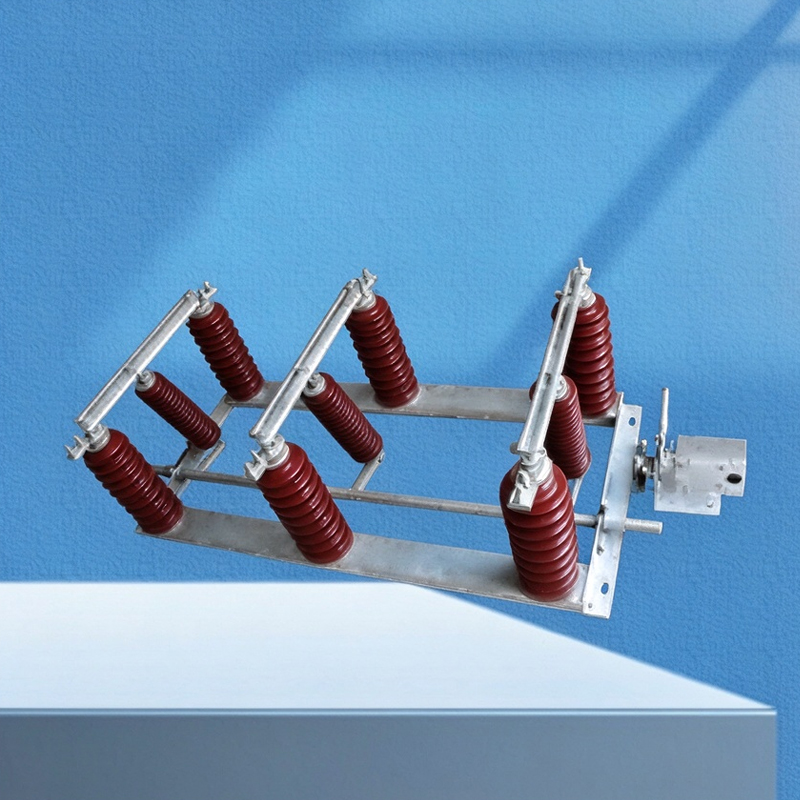
The GWI-10 exteral high voltage Isolation switch is sultable for Installation onextemal hgh voltage distributlon equlpment tnes, to cut ofl and comvert lineswhen there is voltage or load on the power supply line. This product is a three-phase electrical appllance consisting of three separate single pole Isolationswitches. Each single pole Isolation switch has the same components, such as thebase pole Insulation, front and rear static contacts, gate and arc contacts, etcThe GW1-12G external high-voltage isolation switch is a new type of switchdesigned to address a series of issues with the original GW1 switch, and modifledaccording to current national and Interational standards. The switch is equippedwith a grounding switch, which can effectively prevent misoperaltions such ashanging a live ground wire and closing a ground wire, and operators do not need tohang another grounding wire. This product has excellent electrical and mechanicalperformance, and has fuilly met the national standard GB1985 and its first revision,as well as the Intemational electrical standard IEC129 The requlrements of IEC694are an updated product of the current 10kV level external isolation switchThe GWI-12LT external high voltage Isolation switch Is a double column verticalopening type, equlpped with a CSs-5D antl leakage type manual operatingmechanism and a CX-6 type electric operating mechanism. This product Is a three-phase common bottom frame switch, which can be divided into a bottom frame, anInsulating rod, and a conductive part. The bottom frame Is composed of a rotatingshalt, a bent plate, and a frame welded with steel Stx ceramic insulating rods areflxed on the bottom frame, with each two forming a pole. The rotating shaft isequipped with a three-phase operating insulating rod, which is used to operate theopening and closing movement of the three-phase switch. The conductive part iscomposed of a contact, a switch, and a contact seat, and is compressed by a springWhen opening, the operating lever drives the shalt to rotate, causing the operatingInsulation rod to push upwards against the switch and separate the swllch andcontact. The switch rotates around the contact seat, and the contact also movesupwands under the drive of the switch to the apening position.